HWID spoofer 2026 compared to a factory reset and a new PC build and why a dedicated spoofer is the better route to a permanent unban
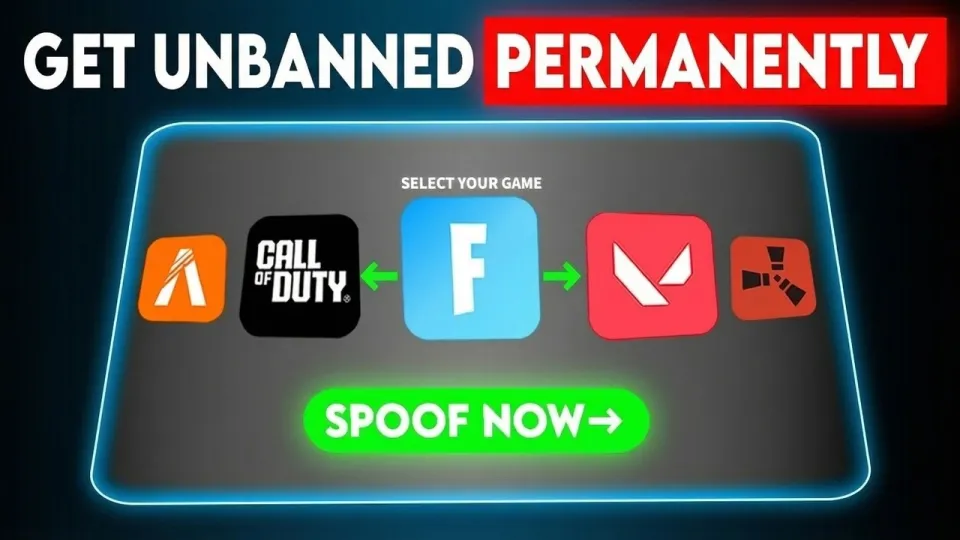
Video: HWID Spoofer 2026 - How to Get Unbanned Permanently
Key takeaways
- A HWID spoofer replaces the hardware identifiers a game reads (disk serials, SMBIOS, MAC address, volume IDs) so a banned machine looks like a new one.
- The Ghosty Services spoofer is sold at ghostyservices.xyz and marketed with a built-in cleaner, so no Windows factory reset is required.
- A factory reset does not change hardware serials, which is why it rarely lifts a hardware ban on its own.
- A license key is bound to one machine, so reusing it after a Windows reinstall or a hardware change can trigger an 'already used' error.
- No spoofer guarantees a permanent unban: anti-cheat updates can re-flag a machine, and the ban on the game account itself is separate from the hardware ban.
A HWID spoofer is a tool that rewrites the hardware identifiers a game or anti-cheat reads from your PC, so a machine flagged by a hardware ban appears as a different system. In 2026 the practical options are a dedicated spoofer such as the one sold on the Ghosty Services product page, a full Windows reinstall, or a new PC, and for most players the spoofer is the only one that addresses the actual cause of the ban without replacing hardware.
What a HWID ban actually blocks and what a spoofer changes
A hardware ban does not live on your game account; it lives on the identifiers the anti-cheat collects from the machine. Typical values include the volume serial number of your system drive, the SMBIOS and motherboard UUID strings, the disk drive serials, the MAC address of the network adapter, and on some titles the GPU device ID and registry machine GUID. When you create a fresh account on the same PC, the anti-cheat matches those values against its ban list and applies the restriction again, often within minutes.
A spoofer works by intercepting or rewriting those values at the level the game queries them, so the collected fingerprint no longer matches the banned record. That is fundamentally different from deleting game files or making a new account, neither of which touches the hardware layer. The Ghosty Services build advertises a built-in cleaner alongside the spoof, which handles leftover traces such as cached logs and registry entries that some anti-cheats check in addition to the raw serials.
HWID spoofer vs factory reset vs new PC build
A factory reset reinstalls Windows but leaves the physical serial numbers of your drives and motherboard untouched, so it is the weakest of the three options against a hardware ban. It can help if a ban was tied to a software fingerprint stored in the registry, but any anti-cheat reading SMBIOS or disk serials will still see the same machine. It also costs hours of reinstalling drivers, games and launchers, and the result is unpredictable.
A new PC build or a replaced motherboard and drive is the only method that is guaranteed to change every identifier, because the values are physically different. The trade-off is cost: a new motherboard, CPU and storage can easily run several hundred dollars, and if the ban follows the network adapter or a reused drive, the problem can survive the rebuild. Swapping only the drive is cheaper but leaves the motherboard UUID exposed.
A spoofer sits between the two: it costs far less than hardware and changes more identifiers than a reinstall. The honest caveat is that it is a software layer, so it depends on staying compatible with anti-cheat updates. That is why vendors push updates regularly and why a spoof that worked months ago can stop working after a patch.
How the setup works step by step
- Buy a license on the official product page and keep the key somewhere safe; it is tied to the machine it is first activated on.
- Download the loader only from the vendor's own site or Discord, never from a mirror or a reupload.
- Close the game, its launcher and the anti-cheat service before running the loader, since files in use cannot be modified cleanly.
- Run the loader as administrator, paste the license key, and let the cleaner pass finish before the spoof is applied.
- Reboot when prompted so the new identifiers are loaded at startup rather than only in the current session.
- Verify with a system information tool that the disk serial, SMBIOS UUID and MAC address now read differently from before.
- Launch the game on a fresh account and play a short session before committing to a long one.
Skipping the reboot is the most common reason a spoof appears not to work: the values are changed on disk but the running session still reports the old ones.
Typical buyer questions about keys, payments and detection
The most frequent support issues around paid spoofers are licensing and billing rather than the spoof itself. A key that reports it has already been used on another HWID usually means the license was activated before a Windows reinstall, a drive swap or a network adapter change, and the binding no longer matches the current machine; the fix is a key reset through the vendor's support, not a second purchase. Declined payments are typically the card issuer blocking a digital-goods transaction, so a different payment method or a quick call to the bank resolves it faster than retrying.
On the detection side, buyers regularly ask whether a spoofer is undetected. No vendor can promise that permanently, because anti-cheat teams add new checks with every update. What you can control is using the current loader version, avoiding public reuploads that may be modified, and not running the spoofer while the game is open. A related doubt is whether a spoof survives a Windows update; major feature updates can reset some identifiers, in which case the spoof is simply reapplied.
Which games the spoofer is used for
The same hardware identifiers are read across most modern titles, which is why one spoofer is marketed for several games at once. Fortnite and Valorant are the two biggest requests, since both use aggressive anti-cheat systems that tie accounts to machines. FiveM, the GTA V multiplayer framework, and Rust are the other common cases, and both are known for server-side and client-side checks that make a clean hardware profile necessary before a new account lasts.
One claim worth noting from the vendor is that this is the first spoofer that works in Fortnite tournaments. Tournament environments often run additional integrity checks and sometimes staffed machine inspections, so treat any tournament use as higher risk than casual play and confirm the rules of the specific event first.
Limits of a permanent unban and how to avoid a re-ban
A spoofer removes the hardware link between you and the old ban; it does not restore the banned account, and it does not make future cheating undetectable. If the new account is flagged for the same behaviour, the anti-cheat collects a new fingerprint and the cycle repeats. Players who get the longest life out of a spoof keep the new account clean, avoid the same lobby patterns and hardware that triggered manual review, and reapply the spoof after major Windows updates.
Vendor guarantees should be read precisely. A refund guarantee covers a spoofer that fails to change identifiers, not a ban that happens later for other reasons. The realistic expectation is a working spoof, a clean machine profile and a fresh account, not immunity.
Official links
- Product and license purchase: https://ghostyservices.xyz/product?id=hwid-spoofer
- Support and update announcements: http://discord.gg/ghostyservice
Summary
A HWID spoofer is the middle path between a factory reset, which does not change hardware serials, and a new PC, which does but at full hardware cost. The Ghosty Services build combines a spoof with a cleaner so no Windows reinstall is needed, and its key points are a refund guarantee and support for Fortnite, Valorant, FiveM and Rust. Buy the license only from the official Ghosty Services product page, keep the key bound to one machine, and reboot before testing. The video breakdown on the Ghosty Services channel walks through the same loader flow shown here, and the Discord is the fastest route for key resets and payment issues.
Questions & answers
Why was my payment for a HWID spoofer declined?
Digital-goods purchases are frequently blocked by the card issuer's fraud filters rather than by the seller. Try another payment method, or approve the transaction with your bank and retry. If it still fails, open a ticket on the vendor's Discord so the order can be checked manually.
My license key says it has already been used on another HWID. What should I do?
The key is bound to the machine it was first activated on, so a Windows reinstall, a drive swap or a network adapter change can break the match. Do not buy a second key; request a reset through the vendor's support with your order details. After the reset, activate it once on the current configuration and reboot.
Is a HWID spoofer undetected and safe to use?
No spoofer can be permanently undetected, because anti-cheat teams add new checks with each update. Safety depends on using the current loader from the official source, running it with the game and anti-cheat closed, and reapplying after major Windows updates. Public reuploads are the main risk, since they may be modified.
Does a HWID spoofer give a permanent unban?
It permanently removes the hardware fingerprint that linked your PC to the old ban, but the banned account stays banned and you need a fresh one. A new ban can still happen if the new account is flagged for the same behaviour. Treat it as a clean start, not immunity.
Source: HWID Spoofer 2026 - How to Get Unbanned Permanently · Markdown version